
The Cholangiocarcinoma Research Institute, Khon Kaen University, in collaboration with Singha Volunteer.
- November 8, 2025
- admin
- 0
The Cholangiocarcinoma Research Institute, Khon Kaen University, in collaboration with Singha Volunteer.
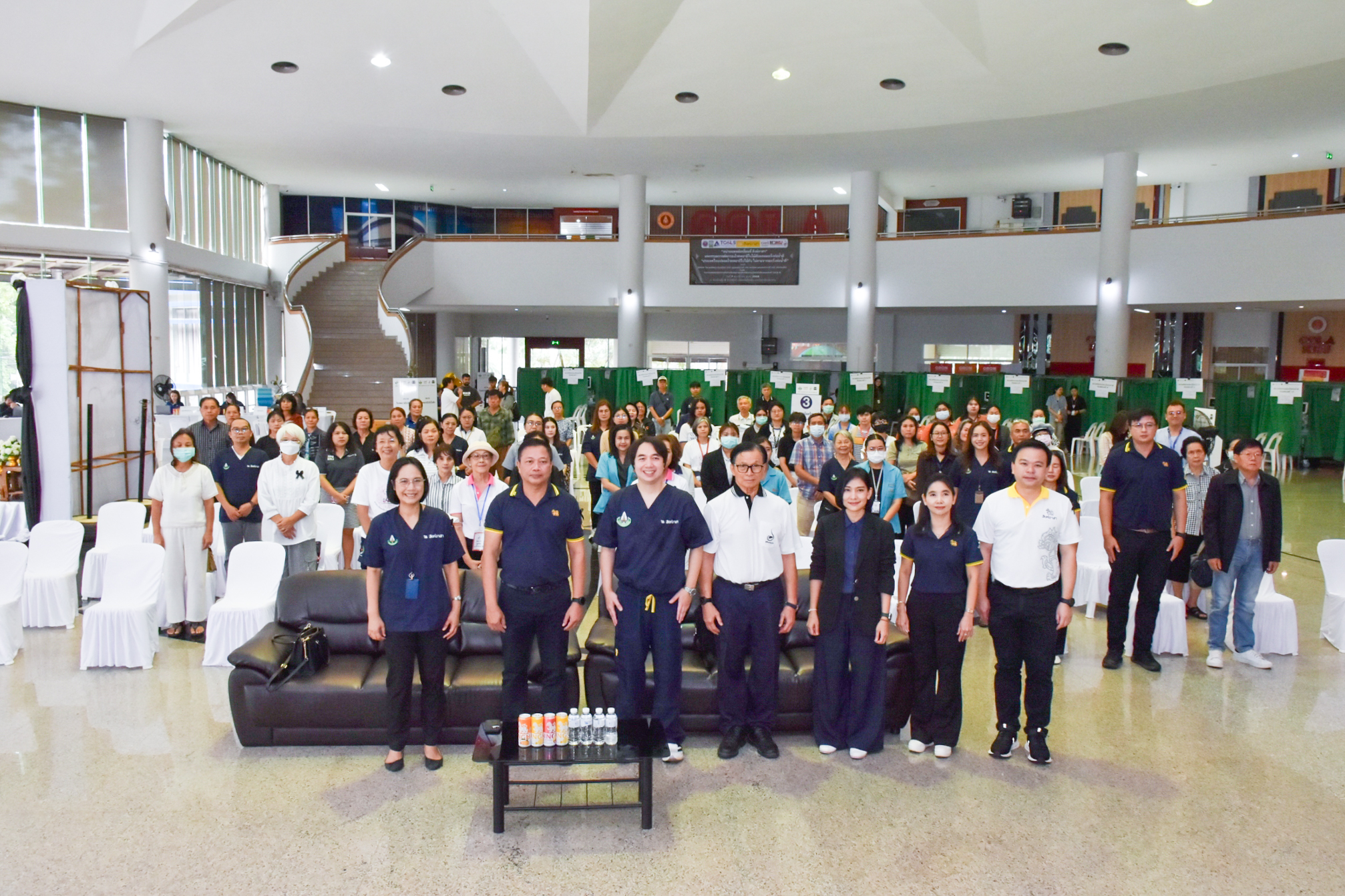
On November 7, 2025, the Cholangiocarcinoma Research Institute, Khon Kaen University, led by Assoc. Prof. Dr. Watcharin Loylom, Director of the Cholangiocarcinoma Research Institute, Khon Kaen University, the Cholangiocarcinoma Center of Excellence, Srinakarin Hospital, Faculty of Medicine, Khon Kaen University, and the Cholangiocarcinoma Foundation, in collaboration with Singha Volunteer (Phraya Bhirombhakdi Foundation, Boon Rawd Brewery Co., Ltd., and Khon Kaen Brewery Co., Ltd., affiliated companies), organized the “Singha Volunteer Mobile Medical Unit” event for liver fluke disease and cholangiocarcinoma screening.
"Thailand is free from liver fluke disease; no one dies from bile duct cancer."
The event was honored by the presence of Assoc. Prof. Dr. Patarapong Makarawes, Dean of the Faculty of Medicine, Khon Kaen University, who presided over the ceremony; Assoc. Prof. Dr. Watcharin Loylom, Director of the Cholangiocarcinoma Research Institute, Khon Kaen University, who gave the report; Mr. Pongsawat Panomai, Managing Director of Khon Kaen Brewery Co., Ltd., who spoke about supporting the Singha Volunteer Mobile Medical Unit activities in the Northeast; and Dr. Ruangsap Thueannadee, President of the Cholangiocarcinoma Foundation, who spoke about supporting the campaign to eliminate liver fluke disease and cholangiocarcinoma.
This event included liver fluke screening using the rapid urine liver fluke screening kit OVATK and ultrasound screening for cholangiocarcinoma. More than 200 people participated, including members of the public, Khon Kaen University staff, and students. 98 people were screened for liver fluke infection, with 16 (16.30%) found to be infected and receiving anthelmintic medication on the day of the event. For the ultrasound screening, 109 people in the high-risk group were examined, with 4 (3.67%) suspected to have cholangiocarcinoma.